
Chris Leonard on holding space for the grievers
For over 40 years, Chris Leonard has been bringing mindful awareness and compassionate presence to her work, which focuses on grief and loss, worker well-being, and restorative approaches for care and repair.
On Saturday, March 28th, 2026, Chris will be our honoured guest at Kitchen Table Sesh — the first of our series of community dinners for Black caregivers, grief, and death-care workers. A respected Toronto leader in this space, we spoke with her about the support she has been providing within community.
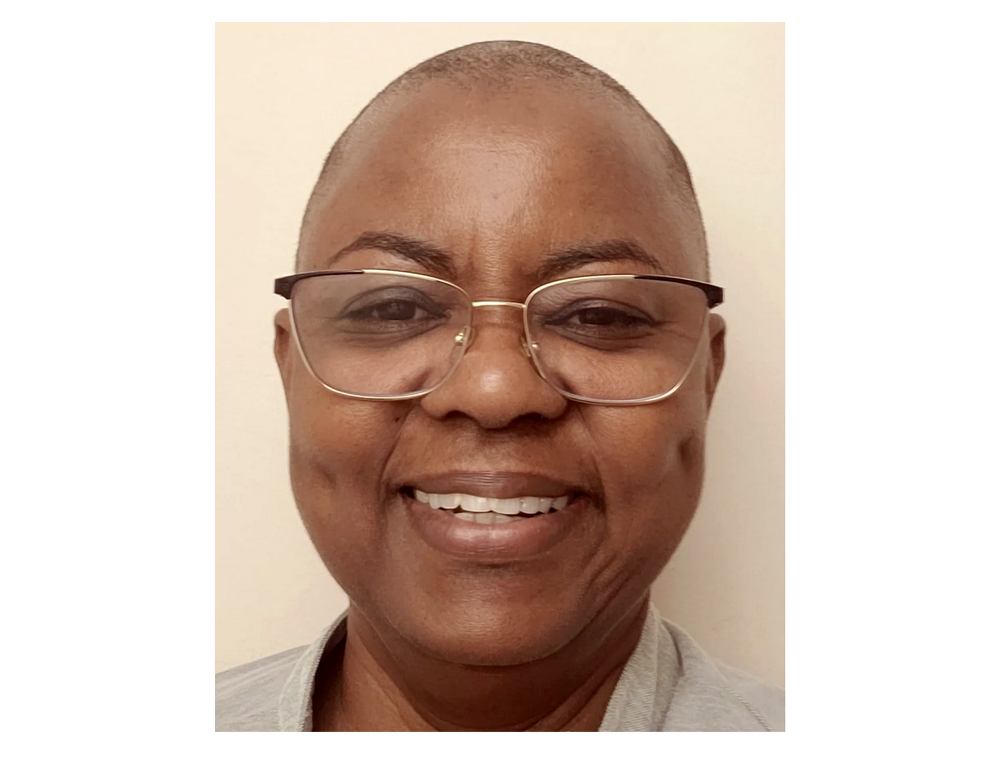
KMA: You have a long history of doing grief work, dating back to the 1980s. How did you get into doing this work and how does it feel to have witnessed so much over the years?
CL: Wow! It's been that long! But really, my work in the ‘80s with loss was more related to supporting women experiencing incarceration. It wasn't until the early ‘90s that I started supporting folks who were living with HIV, and actually back then there were more people dying from complications due to AIDS.
But yes, in 1991 I started volunteering at Black CAP (Black Coalition for AIDS Prevention). Back then people did not have access to medication, and sadly we were losing people pretty much every month or so. It felt very hard to witness the isolation and pain people were experiencing due to HIV stigma. And to be honest, the deaths were so unrelenting that I didn't have time to stop and process how I was doing, really.
Fortunately, what helped me to cope was the fact that I was studying to be a Zen shiatsu therapist during that time. After work, I would head straight to the dojo I was studying at. There, every class started with chanting and silent meditation, followed by breathing and physical exercises that included tai chi or qigong.
So, while I didn't plan it that way, that training was the perfect mind-body training that helped me to learn practices to clear physically, emotionally, and mentally. That's what helped me to ground and hold steady — back then and even now, all these years later!
KMA: For the most part, what type of organizations and community groups have you worked with doing this type of work?
CL: With organizations, it's primarily the social service sector (e.g., community health centres, HIV/AIDS, harm reduction, frontline workers, shelters, etc.). I also work a lot with the City of Toronto but seldom with the private sector.
For the work within community, a lot is through the City after critical incidents. However, over the years, I've sat with a number of community-led groups to support with processing a range of losses and, at times, I've had a few family members reach out for support.
KMA: From working with these groups, what types of grief do you find needs more support, and is there a type of loss many don’t recognize?
CL: When it comes to the support that's needed, it really varies. It depends on the circumstances around the loss. Like was it a homicide, suicide, tragic accident, gun-based violence, etc., and who the person was, people's connection / attachment to them, or how old they were when they died. Sometimes the support needed immediately after the loss is much different than what folks might need months after or around an anniversary of the death.
KMA: How do you hold / keep the memories of those who have come and gone? And how do you pass their legacies on?
One of Black CAP’s grounding principles is the Adinkra symbol for ‘together we are linked in life and death.’ I hold and honour the memories of those who've transitioned by continuing to call their names. I still remember and call the name of the first community member who died when I started back then.
I carry them with me in my heart, I speak about their courage and the legacy many of them have left behind that, even today, inspires those who are newly diagnosed.
KMA: How do you help Black families and individuals process grief, especially in a community where grief can be more communal and frequent?
CL: I do what I do in the ways that I do it with the guidance and support of our ancestors. I understand that my role is not to fix or try to make anyone feel better.
I am simply walking beside them as a witness, validating their experience, and engaging with them in such a way that when they feel safe, they will choose how much of their story they will share with me — whether it's a loss story about a drug-poisoning death, community violence, someone being sent away to do hard time, or someone dying peacefully following a health issue.
The work could be as simple as acknowledging their experience in a text, during a phone call, or an in-person individual or group-sharing circle.
I trust that they are the ones navigating their journey with grief and let them lead me to support them in the way they are choosing for themselves — individually or collectively.
KMA: How do you incorporate cultural practices, traditions, and spirituality into your death work, especially when working within the Black community?
CL: I start with myself to ensure I am 'set' physically, emotionally, mentally and spiritually. I acknowledge our ancestors, and depending on who I'm working with, I might even pour libation to invite the ancestors to come sit with us.
I include practices that help with accessing and expressing feelings. So, depending on the intention for the session, it might include music, movement, sound, storytelling, the elements and, at times, ritual.